
Yuchen Li: Visualising Fragments of Traumatic Memory through photography
by Jenny Ping Lam Lin
In Yuchen Li’s practice, people, objects, and environments are assembled into images that foreground trauma psychology, fragmented memory, and bodily experience. Rather than offering direct explanations, Li uses photography as a language for the emotions that resist articulation. Through careful staging, composition, and surface control, she shapes visual encounters that draw viewers into the psychological landscapes of identity, stress, and the ways trauma can be translated into art.
Li holds an MA in Fashion Photography from the University of the Arts London, and her training is evident in her command of visual rhetoric. Her photographic series are at once performative and deeply unsettling, not because they seek spectacle, but because they explore vulnerability as something constructed, shaped, and negotiated through everyday surroundings. In her images, conflict and calm coexist, intensity settles alongside stillness, and intimacy is repeatedly framed against autonomy. Often, Li’s distinctly soft visual register allows harsh realities to surface indirectly, highlighting the subtle pressures and lasting marks they leave behind. In this sense, her work reads as both retelling and reworking, turning experience into a form of visual care that preserves complexity rather than resolving it.
This approach is particularly clear in Balm: Emotional Numbness, a series that visualises the psychological condition Li describes as “emotional numbness”. Drawing on a slightly surreal mode of depiction, the work examines numbness not as a momentary mood, but as a bodily state that persists through daily survival. Sensation is repeatedly restricted and flattened, as if feeling is rendered incapable of entering or exiting. The series develops varied textures and emotional tones through strategic interactions between the body and objects, including images of eyes alongside pins, hair alongside scissors, and pigeons alongside human figures. These pairings create a sustained tension between the desire for joy and the immersion in sadness and apathy, suggesting that emotional numbness is not the absence of feeling, but a contradictory way of living with feeling under pressure.
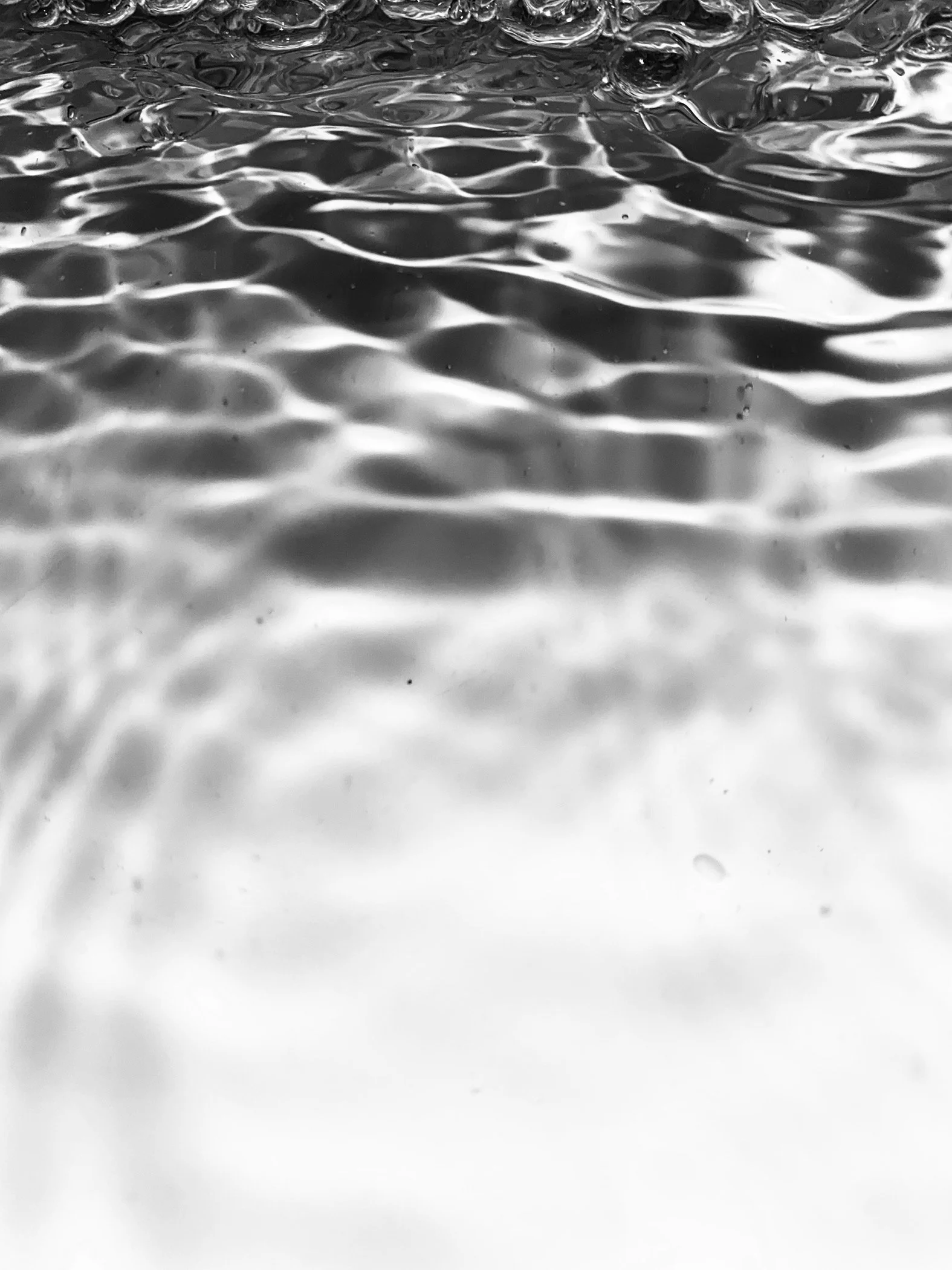
Water, Water, Water
Li’s broader engagement with temporal experience is further articulated in Water, Water, Water. By photographing water, she employs its fluidity as a metaphor for the emotional shifts she experienced while confined to a room in Shanghai in 2023 due to COVID isolation, and at the same time as a means of alleviating her own psychological strain. Here, she draws on photography’s capacity to shape time and on ideas surrounding the decisive moment, using water’s fluidity as a metaphor for emotional shifts. The series also reflects the psychological strain produced by prolonged confinement, where movement, perception, and feeling circulate within the limits of a single space. Flow becomes evidence of change, while stillness marks a period held in place. As a result, the work records not only what was seen, but how time itself was inhabited.
A particular strength of Li’s practice lies in its openness to process. Several works do not present emotion as a fixed conclusion, but as an ongoing condition emerging within limited circumstances, brief intervals, and specific constraints. This ephemeral quality allows the images to operate like visual fragments, inviting viewers to approach them as sites of interpretation rather than destinations of meaning. Ultimately, Li’s art calls for witnesses. In a contemporary context where mental health is frequently suppressed and overshadowed by negativity, her work affirms that vulnerability belongs in public perception and that emotions dismissed by conventional standards deserve to be taken seriously. Through artmaking, Li demonstrates how creative practice can function as grounding, enabling the maker to pause, think, and reframe. At the same time, the work offers a way to document emotional fluctuations when experience feels most unstable.
Across her series, the purpose remains consistent: to encourage acceptance of negative emotions while offering a practical form of relief. By transforming feeling into image, Li introduces playfulness without dissolving privacy, allowing tenderness to survive within the boundaries of representation.
Emotional Numbness:
https://yuchenlimoxi.cargo.site/emotional-numbness
Who Am I:
https://yuchenlimoxi.cargo.site/who-am-i
Water, Water, Water:
https://canva.link/ibhd7kig5561vyp
artist bio/ statement: