
Vidya Kamalesh
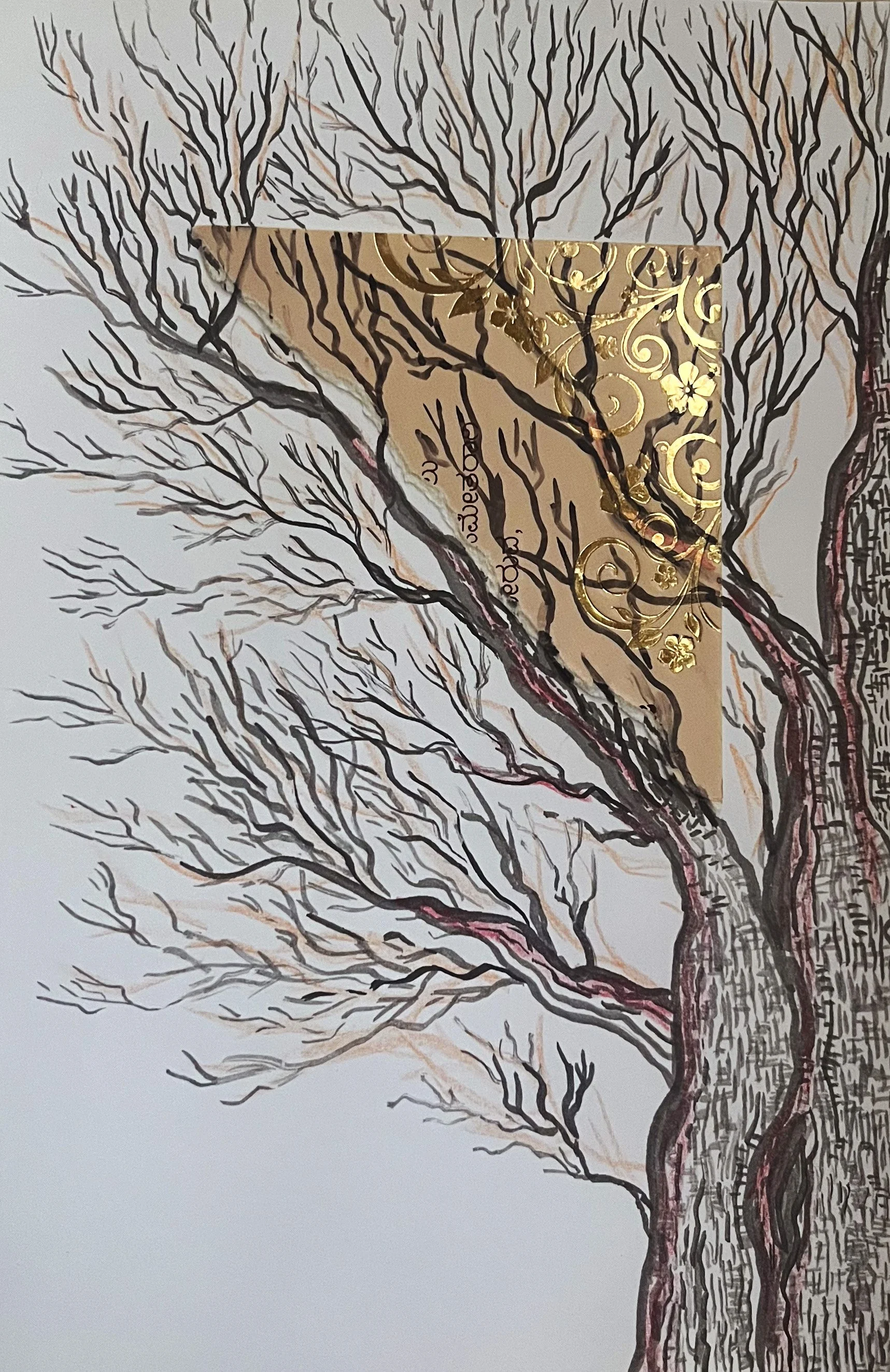
The Nature of Nurture
Size: W 10 in x H 15.5 in Medium: Collage on White Ivory Paper, Indian ink and brush pens.
Concept note: Across geographies and cultures, nature has been perceived as a living sacred system that human wellbeing is directly dependent on. Indian philosophy posits the Panchamahabhuta: the five foundational elements to the universe and the human body: earth (Prithvi), water (Jala), fire (Agni), air (Vayu) and ether/ space (Akasha), and the significance of maintaining harmony with natural elements. This artwork documents my recent healing journey from a slip-disc and spinal cord injuries that left me confined to a bed. Recovering within the interior of a room for a quarter of a year, I capture healing fragments of nature that I sense from a window side. Connecting with nature forms a powerful pathway for regulating the nervous system, especially after chronic pain and emotional trauma. Human relationships can often feel unsafe or superficial. However, nature offers a sanctuary free from judgement, demands nothing, lets things be, and helps reclaim autonomy and a sense of peace at one’s own pace. Its vastness imbues an instant cognitive perspective, gently pulling one into the present. By taking fragmented, pre-existing elements and imbibing them into a new whole, this series mirrors how I construct meaning in a fractured world. Bits of celebratory cards with metallic foil make their way under meditative brush lines, forming a profound commentary on memory, identity and the human predicament. The established narrative of celebration is challenged in a new dialogue of pain and the passage of time, positing that humans are a collection of experiences, choices and memories, actively constructing meaning and identity in our daily chaos.
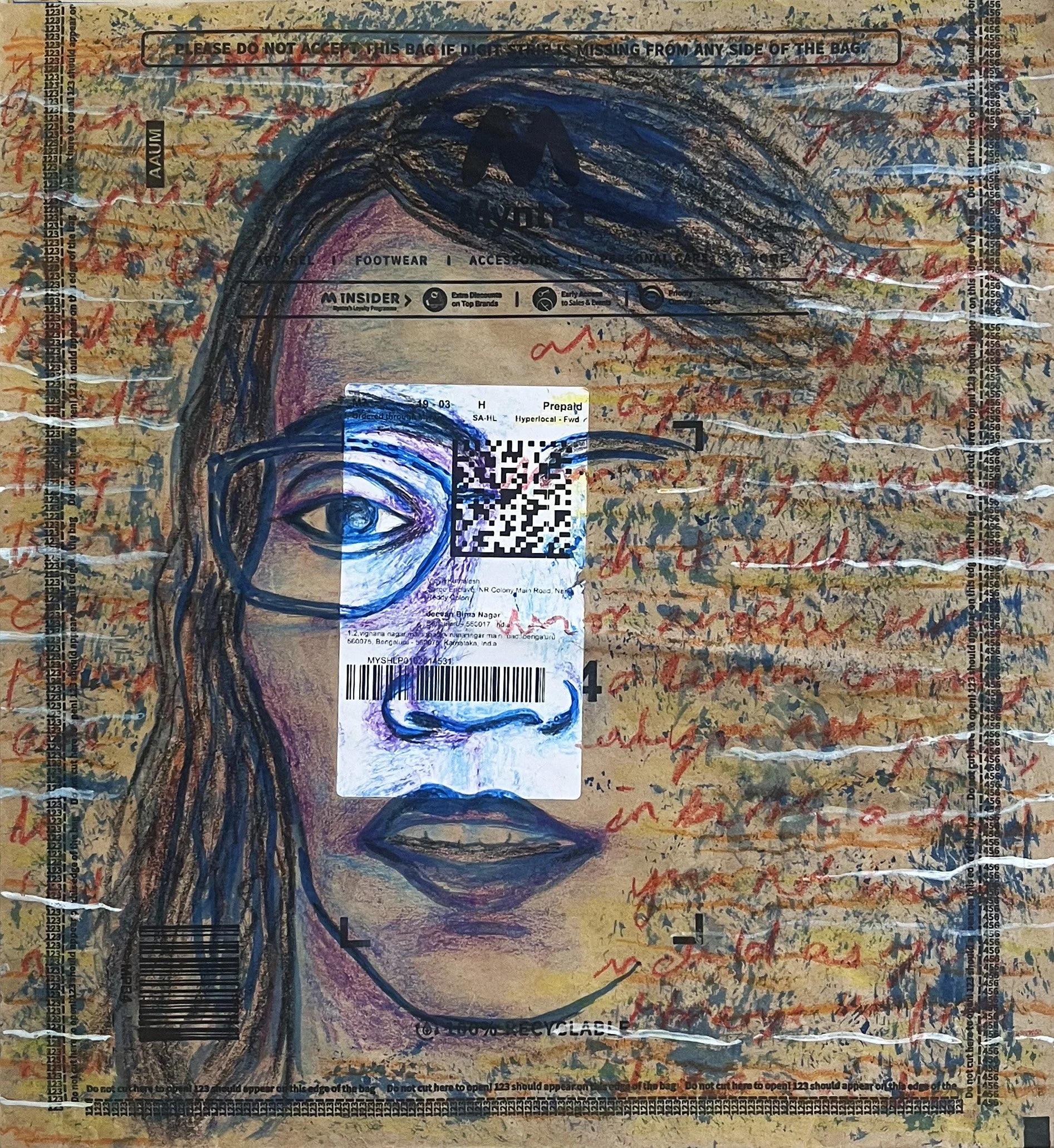
The Illusion of Necessity
Size: W 1.75 ft x 1.92 ft Medium: Acrylic paints, Indian ink and crayons on packaging material.
Concept Note: “The Things you own end up owning you” Joshua Fields Millburn, Everything That Remains: A Memoir by The Minimalists Today’s intersection of quick commerce, consumerism and social media addiction has drastically transformed life in my home city, with its hyper-efficient ‘impulse loop’. Algorithms engineered to spark purchasing desire are complemented by instant-delivery ecosystems. Social media convinces us of living an incomplete existence without niche products on TikTok and Instagram Reels, and packaging them as ‘hacks’, ‘self-care’ and ‘saves’ lowers psychological resistance to purchasing decisions. While providing high frequency gig employment opportunities for the city’s large migrant force, it posits other challenges. Modern consumerism ties one’s personal identity and self-worth to things one owns. Disposable materialism due to shifting trends reflects a satisfaction from the act of acquiring a product, rather than its long-term use. Dopamine hunting to cope with anxiety, boredom and stress in the fast-paced urban chaos is directed towards tangible, predictable rewards. Micro-transactions over time add up to significant financial drain, packaging waste, and environmental overheads with a massive trail of emission, while the dopamine crash in the aftermath leaves a psychological void that fuels the perpetual cycle. Drawing from Dadaism, my artwork explores this illusion of necessity by transforming disposable packaging material into a canvas, challenging our perceptions of value and consumption. Using acrylic paints, Indian ink and crayons to alter the essence of the package, the exterior outweighs the interior, creating a juxtaposition between being a tool of capitalism and a canvas for human expression. The commercial packaging already carries its own history of shipping labels, logos and product information, while painting over it creates new meaning in interactive layers.