
Ilona Joy: Between Control and Surrender
Article by Stephanie Leung
There is something familiar yet unsettling about the figures in Ilona Joy’s images. Caught between photographic realism and digital artifice, they seem to occupy the gradually dissolving boundary between our physical and virtual worlds.
Working across photography, moving image, 3D scanning, generative AI and digital environments, Joy is a multidisciplinary artist, photographer and creative director whose practice explores technology as both an artistic medium and cultural experience. Her work examines the possibilities and limitations of digital self-expression and identity while embracing the unexpected distortions that may emerge from technological processes. She graduated with a First Class BA (Hons) in Fashion Photography from Leeds Arts University in 2024. Her work has been published in Venuz Magazine, a London and Copenhagen-based publication, and Digital Blooms has been exhibited at Aire Place Studios in Leeds.
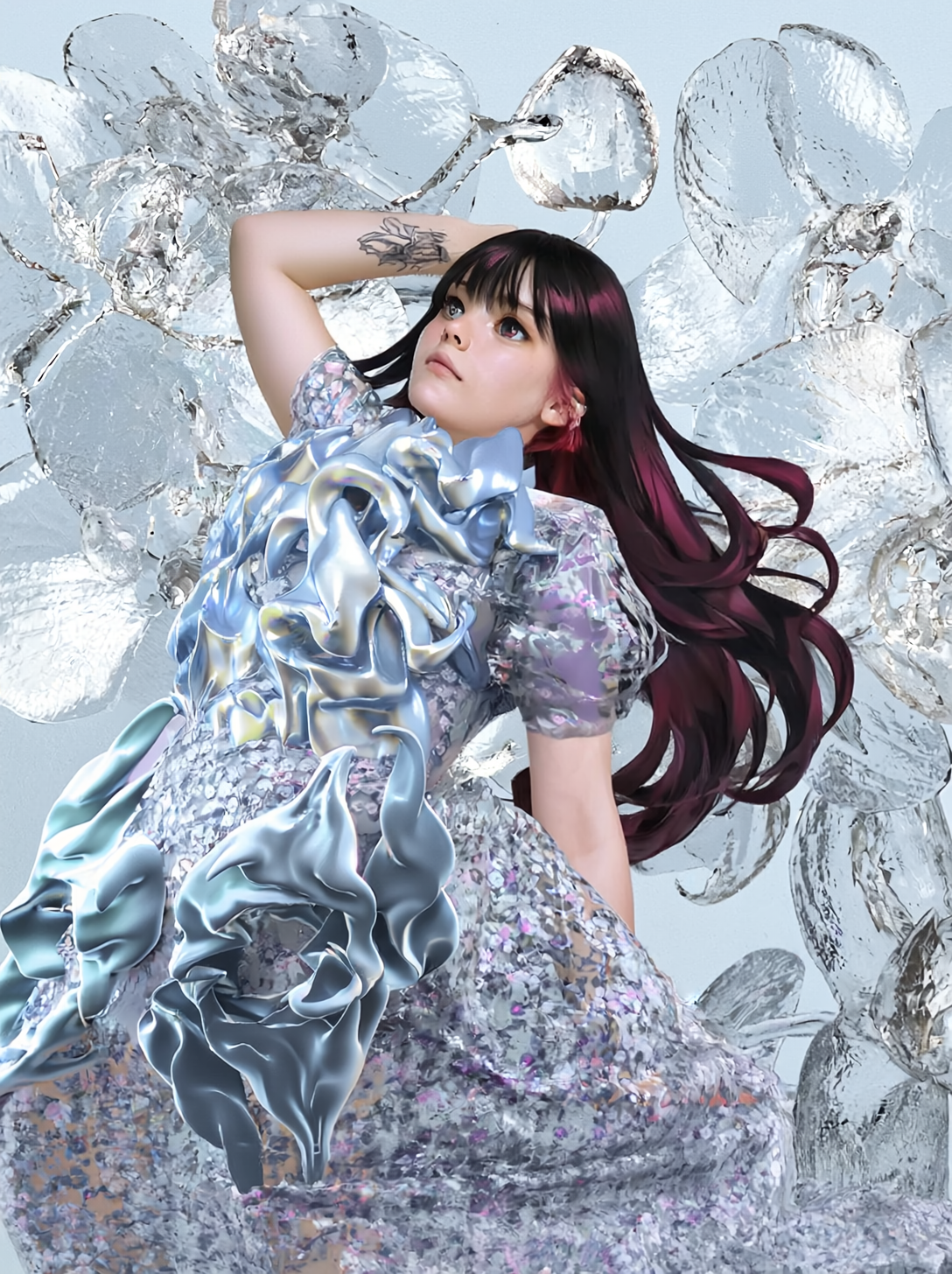
She Blossoms Online
In She Blossoms Online, the female body occupies an unstable space between organic presence and technological construction. The anime-esque avatar blurs any stable distinction between the human body and its digital representation: while slightly textured skin and a convincing bone structure sustain the illusion of a human presence, her artificiality remains perceptible without close inspection. Her dyed hair, tattoos and liquid-metal garment further complicate the boundary between the natural and the deliberately constructed. Although these visual elements act as different forms of self-expression, the identity they collectively produce remains unstable and subject to transformation. The moving model shifts sideways before slowly morphing and compressing, until her body seems to surrender its physical form, becoming fluid and malleable. This transformation draws parallels to the ways female identity is constructed, performed and continually reconfigured in an age of photo editing and online personas.
Donna Haraway’s A Cyborg Manifesto challenges the divisions between organism and machine, nature and culture, proposing the cyborg as a figure through which to reconsider identities already entangled with technology. Joy’s digitally transformed figure embodies this blurring of boundaries, its human features and artificial construction resisting any stable distinction between the organic and the synthetic. Yet Joy’s vision of digital femininity raises a further question: if digital spaces allow women to reinvent how they are perceived, does this freedom open up new possibilities for self-expression, or merely create another stage on which femininity must be performed?
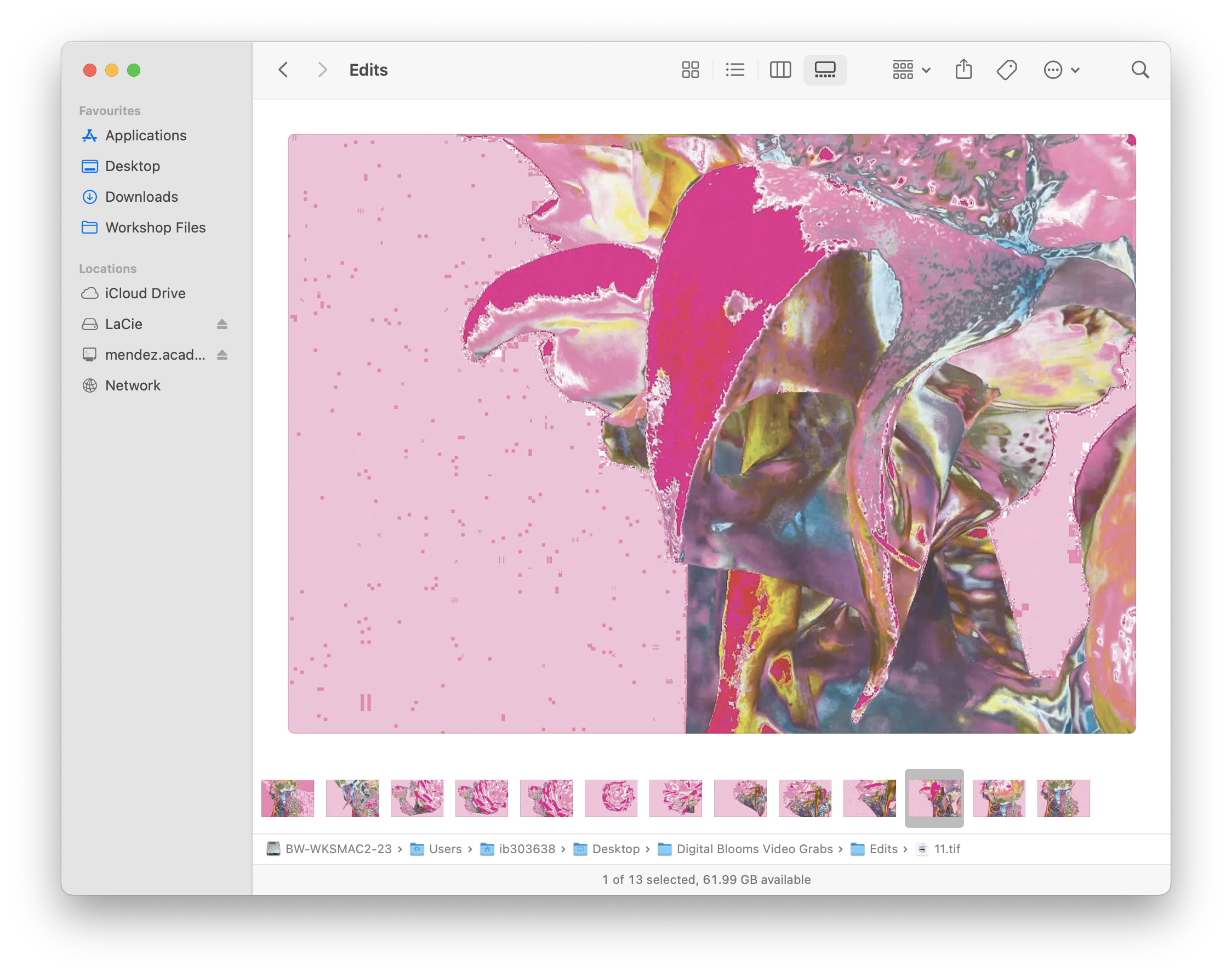
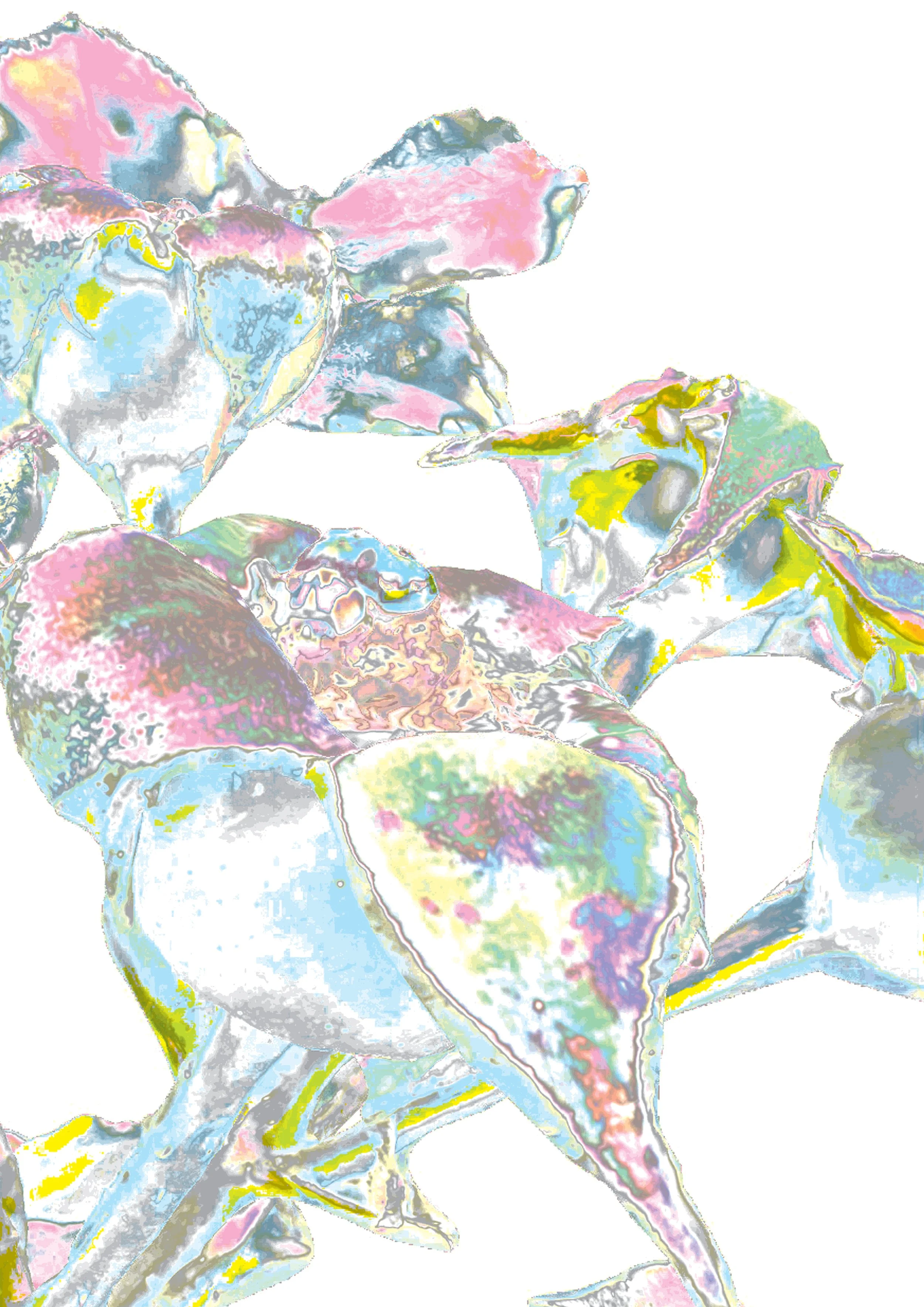
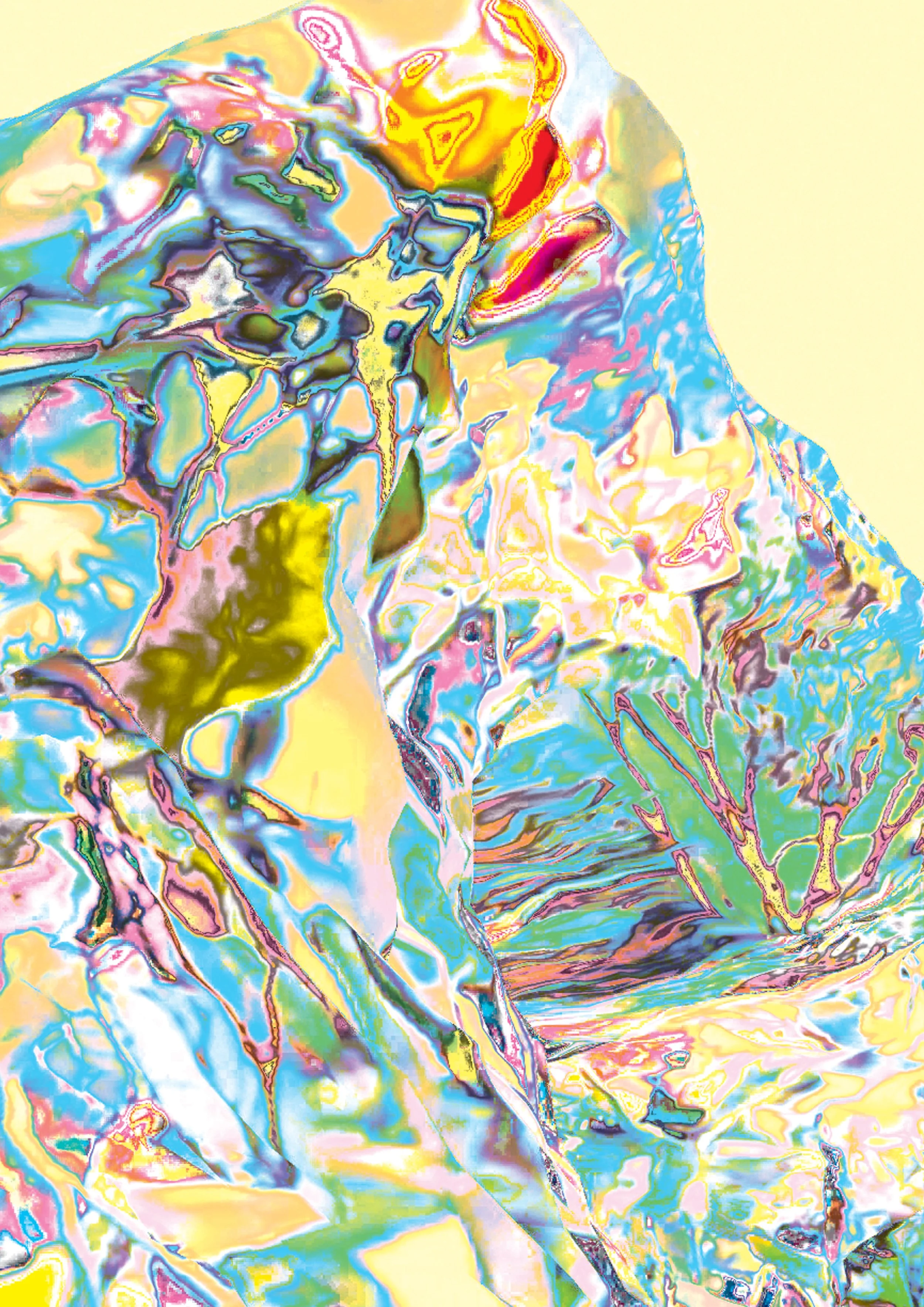
In Digital Blooms, the familiar form of the rose dissolves through digital manipulation. Initially recognisable as botanical forms, the 3D-scanned flowers fracture into distorted shapes and saturated fields of colour, their petals losing definition amid the glitches and unexpected artefacts of post-production. Oscillating between the recognisable and the abstract, the images evoke both organic growth and digital disintegration. Rather than treating these distortions as technical failures to be corrected, Joy embraces them as part of the work’s visual language, finding creative possibilities in technology’s deviation from its intended function. This tension between technological unpredictability and human intention raises a question about where the creative act resides: in the artist’s decisions, or in the unexpected results of the process itself? By reimagining the rose through digital processes, Joy unsettles conventional ideals of natural beauty, challenging the distinction between the organic and the synthetic.
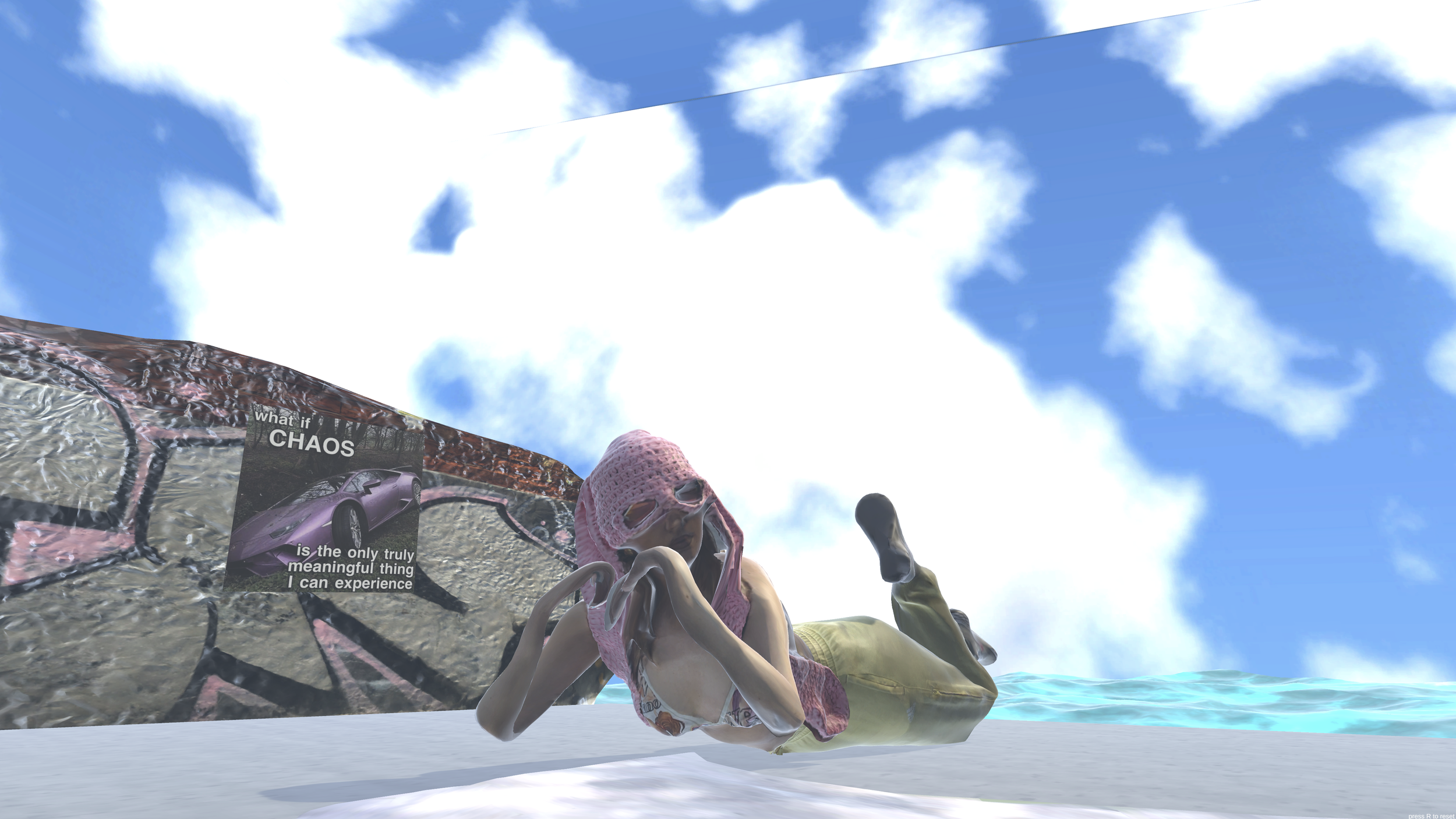
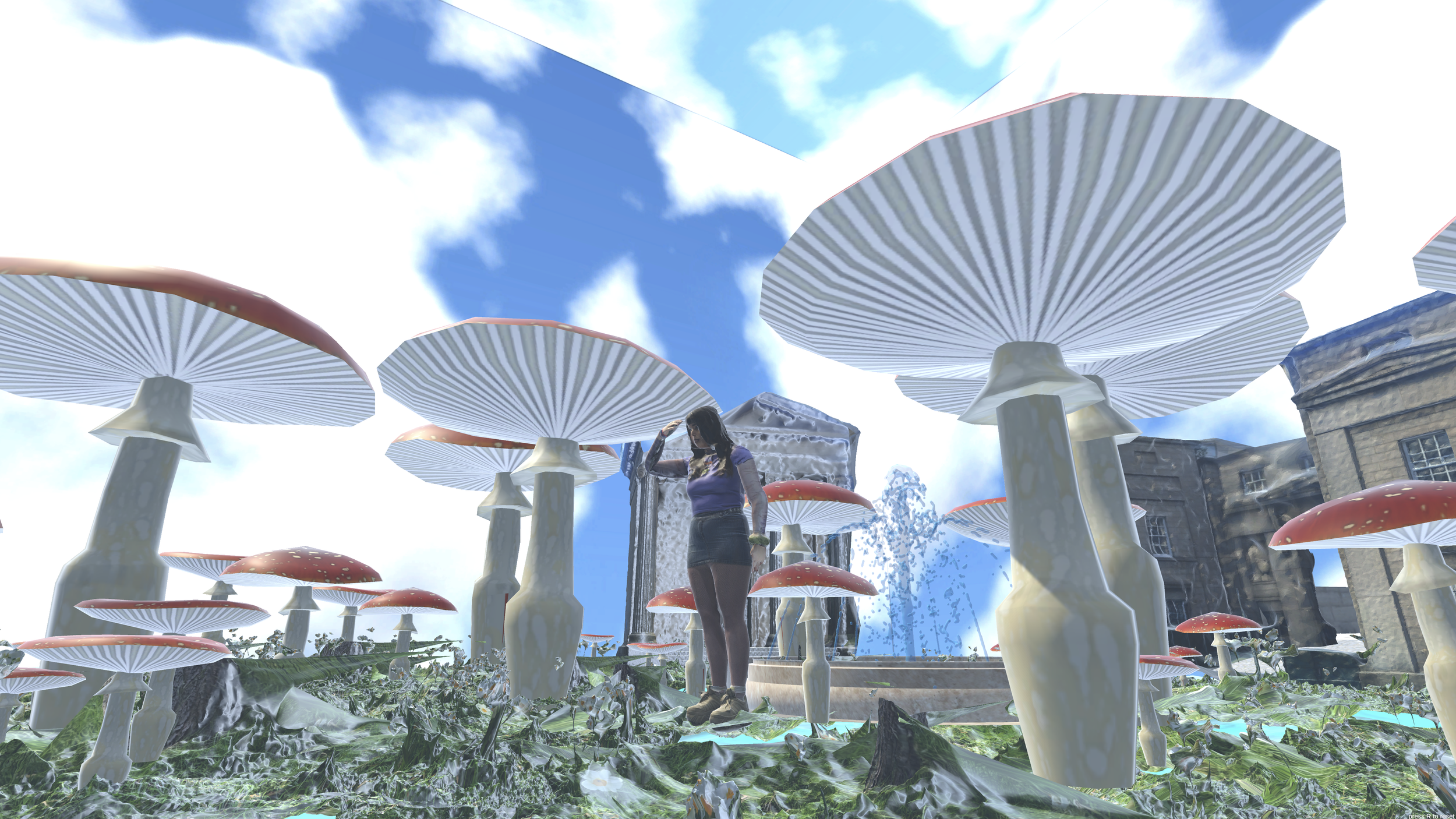
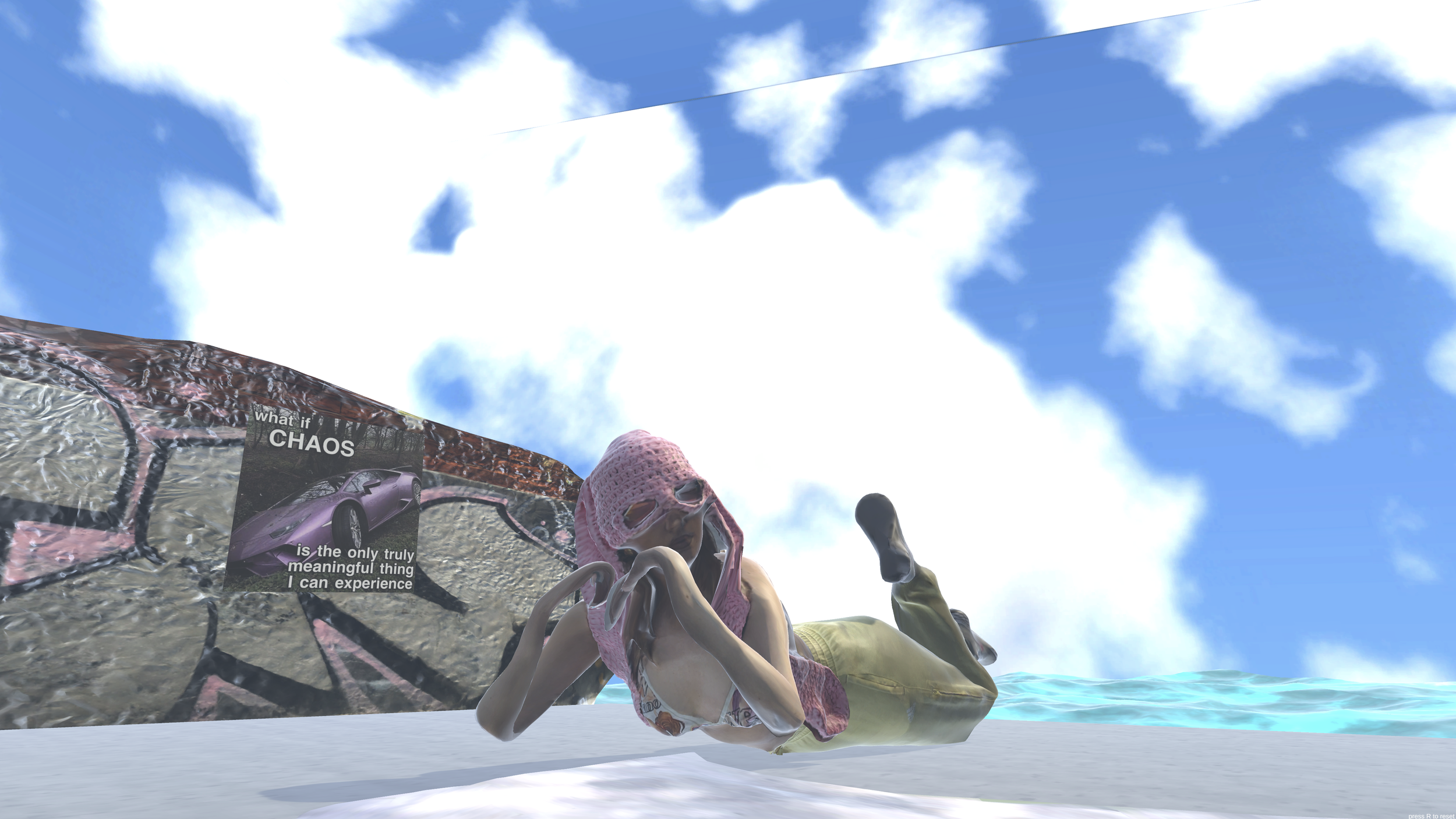
In Dream-Land, real-world architecture and landscapes are reassembled into a surreal digital environment, populated by 3D-scanned fashion models that contribute to its uncanny atmosphere. Drawing on the absurdist aesthetics of Alice in Wonderland and Edgar Allan Poe’s Dream-Land, Joy combines familiar cultural references with internet ephemera and deliberately camp imagery. The resulting environment feels like a fever dream assembled from fragments of online culture, where the familiar becomes unfamiliar and the boundaries between reality and fantasy begin to dissolve. Yet Dream-Land is not simply an exercise in digital surrealism; informed by behavioural and trend research, the project also asks what makes virtual spaces worth inhabiting. Rather than prioritising commerce or mass appeal, Joy places emphasis on what she calls “glimmers”, small moments of joy and discovery, alongside humour, play and niche expression.
Across these works, Joy approaches digital technology as a space for experimentation, where the unexpected can become as significant as the intended outcome. She manipulates digital processes while remaining open to possibilities beyond her initial intentions, whether transforming the female body, embracing glitches in digitally scanned flowers or constructing a surreal virtual world. Yet this openness also raises questions about the risks of increasingly digital forms of self-expression, and how we construct identities and new meaning within them. Returning to Donna Haraway’s cyborg, Joy’s work suggests that the distinction between human and machine is becoming increasingly difficult to sustain. As technology becomes entangled with how we see ourselves and the worlds we inhabit, the question may no longer be whether we should surrender to it, but how we might do so on our own terms.
