
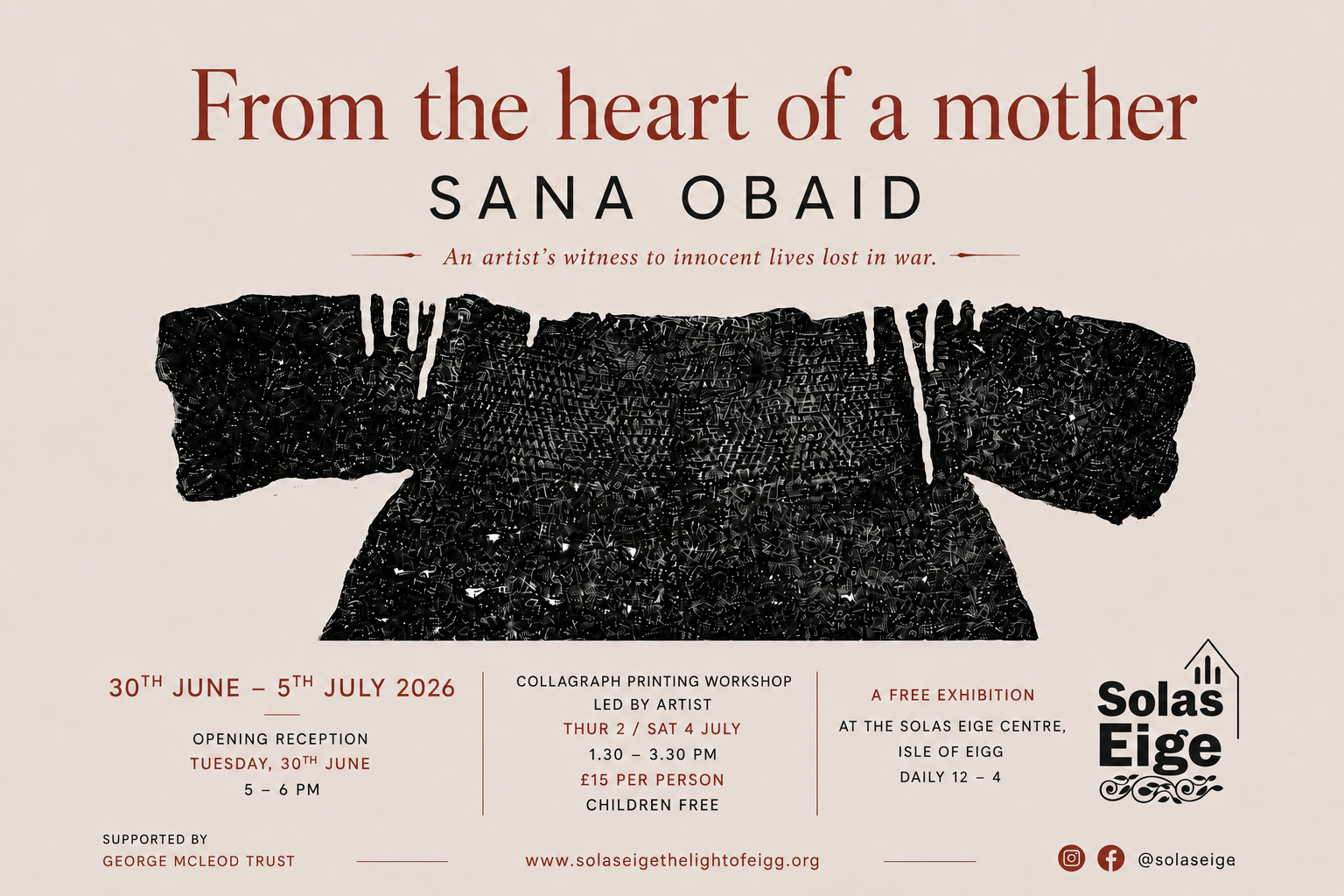
From the Heart of a Mother
Artist Name: Sana Obaid
Date : 30 June – 5 July 2026
Venue : Solas Eige SCIO, St Columba's Church, Isle of Eigg
Artist Bio
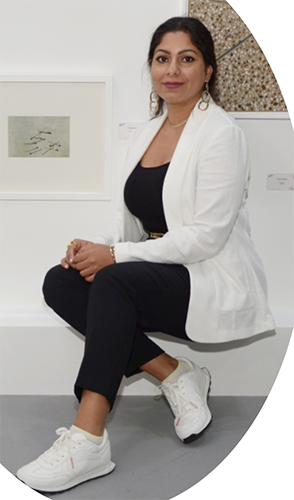
Sana Obaid is a Pakistan-born interdisciplinary artist based in Glasgow whose practice spans printmaking, sculpture, performance, painting, and participatory projects. She graduated with Distinction from the MFA programme at The Glasgow School of Art in 2024 as a Saltire Scholar, receiving the Chairman's Medal for Best in the School of Fine Art and a nomination for the GSA Foulis Medal.
Obaid's practice explores themes of interconnectedness, care, belonging, and collective responsibility. Drawing on spiritual and philosophical traditions that shaped her upbringing, alongside her early training in traditional Indo-Persian miniature painting, she approaches art-making as a process of inquiry and reflection. Through drawing, writing, walking, conversation, and material experimentation, she investigates the complexities of contemporary life and the relationships that bind people to one another.
Working across disciplines allows each project to find its own form, whether through image-making, object-making, performance, or participation. While her earlier work focused on questions of connection and collective experience, recent projects have increasingly engaged with themes of witnessing, fragility, loss, and the ethical challenges of responding to contemporary global conflict. Her work considers how care, presence, and humanity might be sustained in the face of violence, displacement, and distance.
Recent recognitions include the Art Lab Women in Print Prize Residency at Woolwich Contemporary Print Fair (2024), the Visual Arts Scotland + Bothy Project Residency Award (2024), an Artist Fellowship at ArtLab Contemporary Print Studios, UCLan, and the Art for Social Impact Award from Boom Saloon (2026). She has also been shortlisted for the British Council Fellowship and Bloomberg New Contemporaries.
Her work has been exhibited internationally, including solo exhibitions in Pakistan and New York. In 2025, she was selected through an international open call to present her socially engaged performance Love for Peace at the Blue Night Festival in Nuremberg, Germany.
Alongside her artistic practice, Obaid facilitates creative workshops and supports community-based learning initiatives across Scotland.

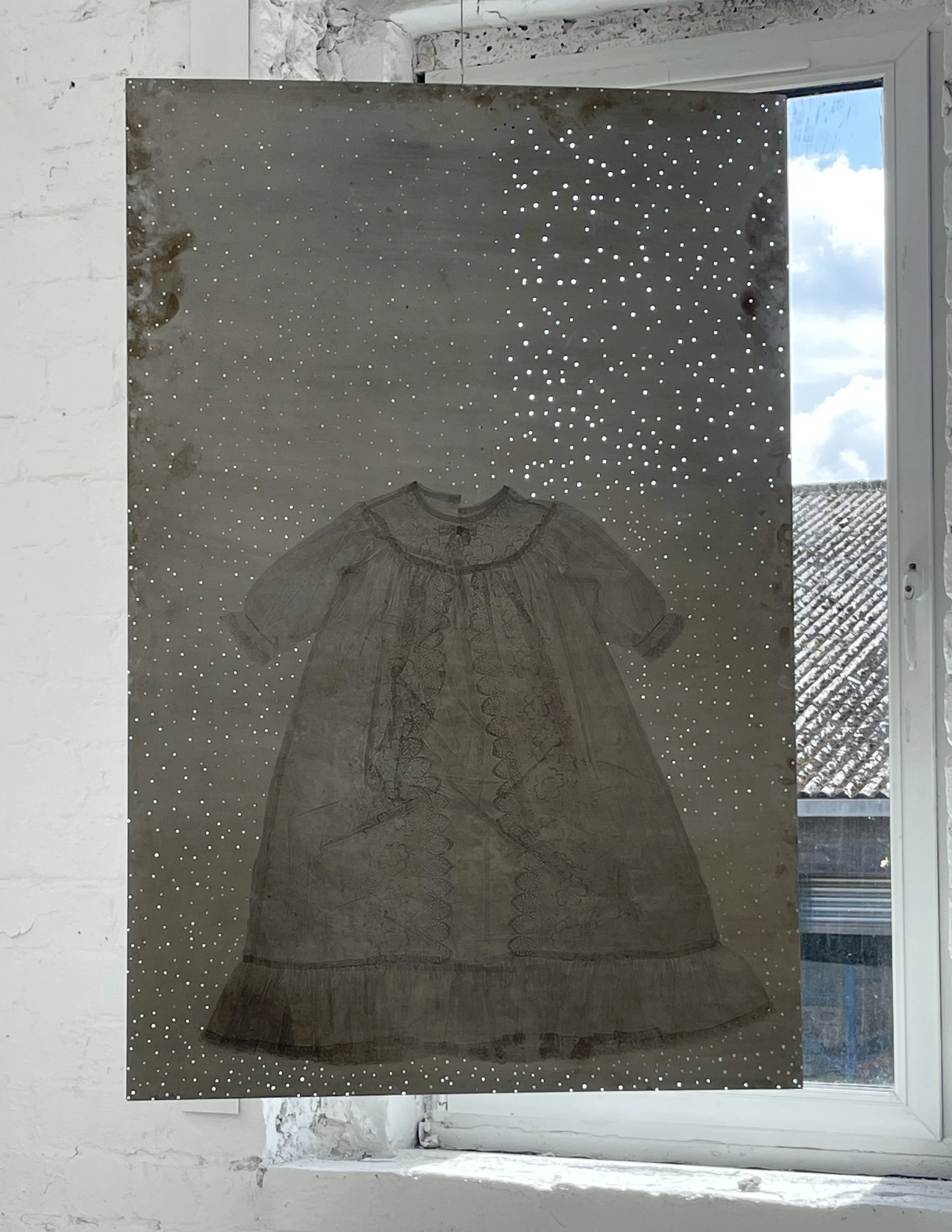
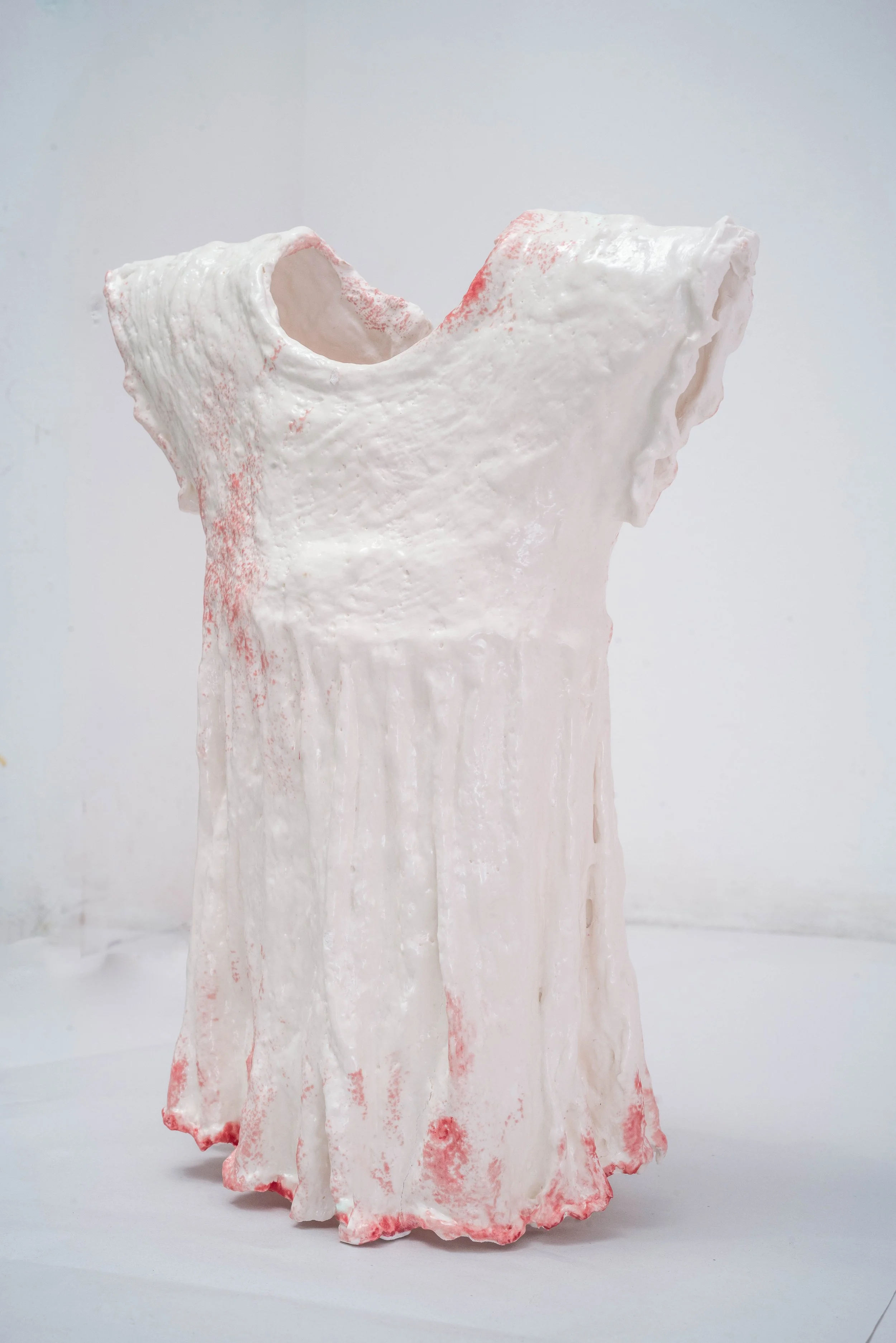
From the Heart of a Mother brings together a body of work developed in response to witnessing the ongoing genocide in Gaza from afar. Rather than seeking to represent events directly, the exhibition examines how violence is carried across distance and absorbed into the emotional and material fabric of everyday life. The works emerge from a sustained engagement with absence, memory, and the ethical and emotional burden of distant witnessing.
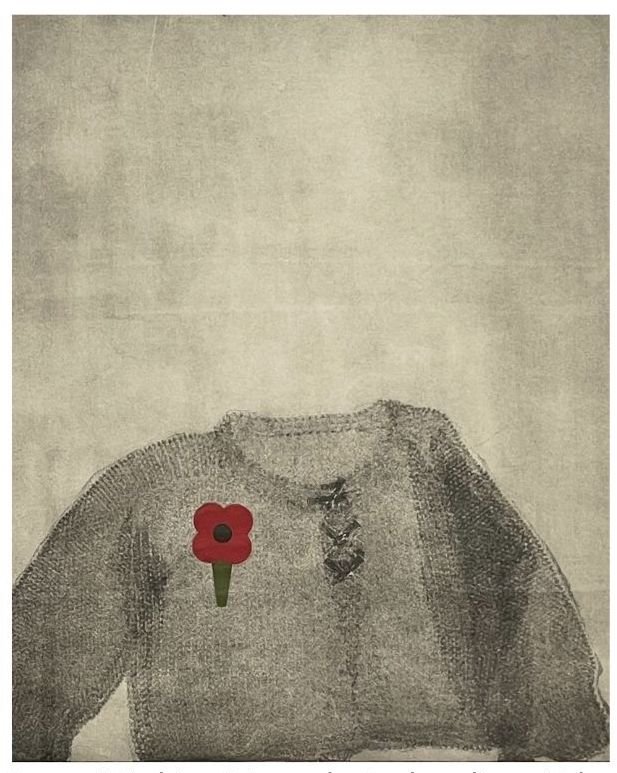
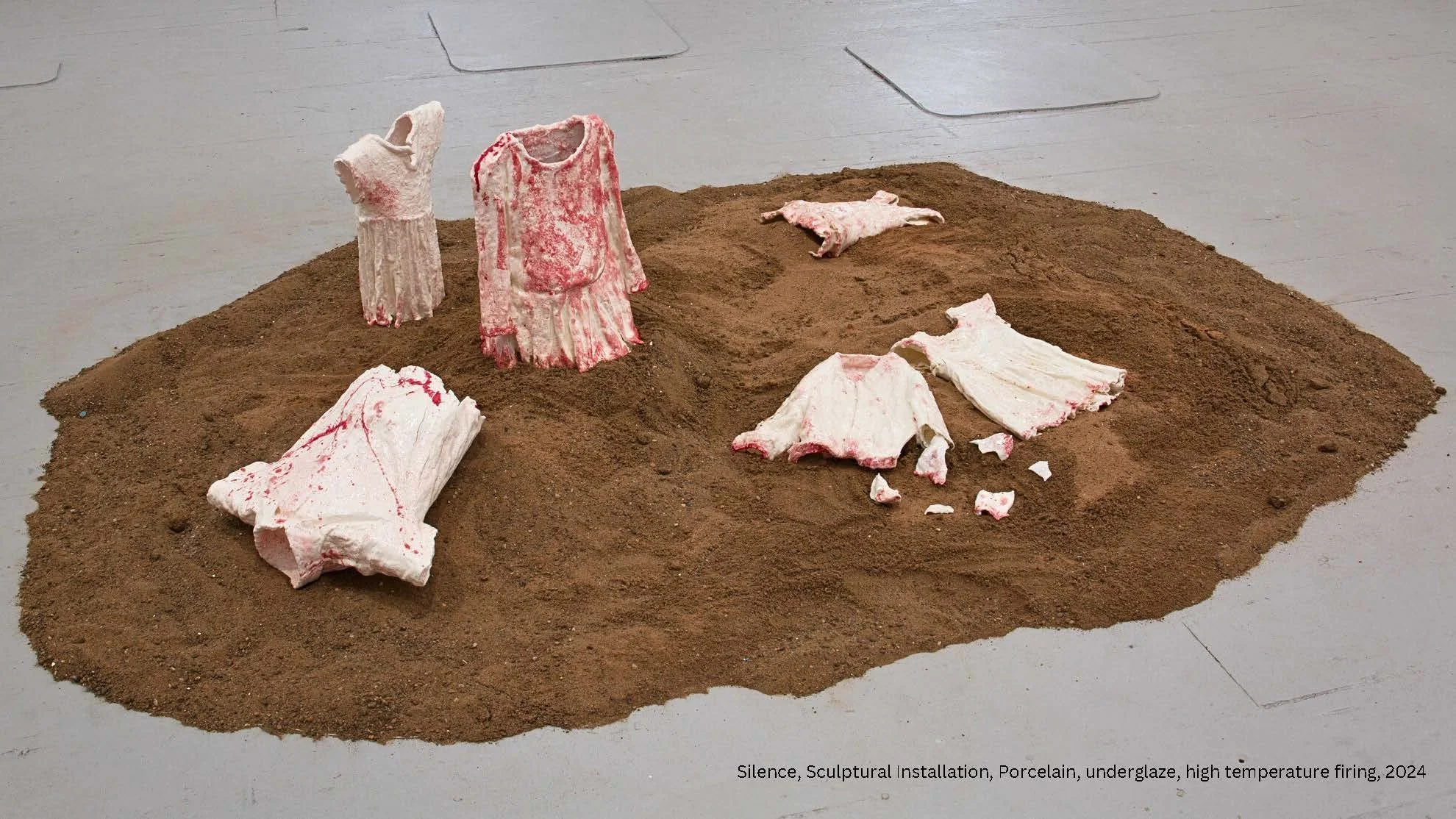
Throughout the exhibition, the human figure is largely absent. In its place appear traces: children's garments, fragments, impressions, perforations, and fragile material remnants. These forms function not as representations of specific individuals but as indexes of lives interrupted. The empty clothes recurring throughout the exhibition evoke the presence of bodies that are no longer there, transforming ordinary objects into carriers of memory, loss, and unresolved grief. Their scale and familiarity make absence tangible; they confront viewers not with images of death, but with what remains after disappearance.
Working across printmaking, sculpture, and installation, Sana Obaid approaches material processes as sites of reflection and transformation. The works were developed through prolonged periods of repetitive labour, etching, burnishing, drilling, piercing, stitching, inking, and rubbing surfaces by hand. These actions became more than technical procedures; they evolved into contemplative gestures through which the artist navigated feelings of helplessness, sorrow, and remembrance. In this context, making becomes a form of witnessing: a sustained act of attention through which emotional experience is translated into material form.
Throughout the exhibition, materials carry emotional and symbolic weight. Metal plates are etched with acid, a process that permanently alters the surface, echoing the way images of suffering become inscribed within memory. Elsewhere, repeated perforations and drilled openings evoke both vulnerability and resilience. The act of piercing metal recalls wounds, ruptures, and traces of violence, while simultaneously creating spaces through which light, connection, and healing might emerge.
In works such as Stars II, hundreds of perforations puncture an etched steel surface, transforming the image of a child's garment into a shifting constellation of light and shadow. The holes oscillate between stars and wounds, simultaneously suggesting violence and transcendence, fragility and endurance. In Fallen, the physical process of making becomes inseparable from the work's meaning. Repeated acts of piercing and stitching translate an internal emotional landscape into material form, expressing the ache of witnessing the loss of children and families caught within political violence. Rather than illustrating grief, the work embodies it through gesture, labour, and process.
Across the exhibition, a restrained visual language of black, white, and metallic surfaces predominates. The near absence of colour creates an atmosphere of quiet intensity in which form, shadow, and material presence take precedence. When red does emerge, it carries particular weight, appearing as a trace of injury, sacrifice, remembrance, or mourning. Rather than depicting violence directly, these subtle interventions register its lingering aftereffects and the persistence of memory.
The exhibition is equally concerned with the contradictions of contemporary spectatorship. Works such as A Pillow emerge from the disorienting experience of encountering war through digital screens while remaining physically removed from its immediate realities. Comfort and catastrophe, intimacy and distance, helplessness and responsibility coexist within the same perceptual field. The work asks how one continues to live an ordinary life while remaining emotionally exposed to extraordinary suffering elsewhere, and how acts of attention might resist the desensitisation that often accompanies repeated exposure to mediated violence.
Presented within Solas Eige—Gaelic for “The Light of Eigg”—this artistic offering enters into dialogue with a space of contemplation, reflection, and communal gathering. The symbolism of light resonates throughout the works, both materially and conceptually. Light passes through perforated surfaces, illuminates traces of absence, and becomes a metaphor for hope, remembrance, and resilience. While the works emerge from encounters with grief and suffering, they do not seek to dwell solely within sorrow. Instead, they consider how attentive witnessing, remembrance, and creative labour might become gestures of care and responsibility.
At its core, From the Heart of a Mother is an exploration of how art might hold what language cannot fully contain. Through repetition, labour, fragility, and trace, the exhibition reflects on the enduring human capacity for empathy and on the possibility that acts of remembrance may also become acts of hope.
Opening Event
30 June 2026 | 5:00 pm – 6:00 pm
Opening Hours
Daily: 12:00 pm – 4:00 pm
Admission - Free
Community Printmaking Workshop
Introduction to Collograph Printmaking
Open to island residents and visitors
Workshop Fee
Adults: £15
Children: Free
Accessibility
Please contact Solas Eige SCIO regarding accessibility requirements and venue access.
Travel Information
The Isle of Eigg can be reached via ferry from Mallaig. Visitors are encouraged to check current ferry schedules before travelling.
Acknowledgements
Sana Obaid would like to thank Solas Eige SCIO and its members, especially Camille Dressler, the Isle of Eigg community, and the McLeod Foundation for their generous support in helping to realise this exhibition and its accompanying community engagement programme.
The exhibition builds upon the artist's 2024 residency on the Isle of Eigg with Visual Arts Scotland and Bothy Project. During her time on the island, Obaid was deeply inspired by Eigg's landscape, community spirit, and collective way of life. The experience left a lasting impression and a strong desire to return, laying the foundations for this exhibition.
Images provided by Sana Obaid.